
#Dance2Vote Initiative
#DANCE2VOTE Campaign
November 2026 Elections
Dance/USA, as a nonpartisan organization, remains focused and committed to ensuring that its members, the dance community, and the arts sector overall, thrives beyond the current moment and continues to provide highly-valued performances, educational events, and cultural programs. Dance/USA champions an inclusive and equitable dance field by leading, convening, advocating, and supporting individuals and organizations. The November 2026 elections at all levels are consequential elections – like all elections – for the future viability of the dance industry and the arts sector. It is essential for all dance artists and dance professionals who are eligible to vote engage with their civic responsibility as Americans and ambassadors of the arts sector to vote to protect the arts. The intent of this election toolkit and this get-out-to-vote campaign – #Dance2Vote – is to ensure dance artists, dance professionals, supporters of the arts, and the general public have accurate information about voting during the 2026 elections and know the relevant issues impacting the dance industry and the arts sector.
The Importance of Advocacy
It is crucial for dance artists, dance professionals, creative workers, and arts/culture supporters to establish working relationships with their elected officials at all levels of government. Elected officials need to know what is happening in their states and local communities on a regular basis so they can make informed decisions and votes on issues and legislation being considered on Capitol Hill to support businesses, non-profit organizations, creative workers, and gig workers. Advocacy messaging should focus on the needs of artists and the creative economy at all levels of government (i.e. economic contributions to the national, state, and local economies; current number of jobs, funding for new works, a robust social safety net.) State arts councils provide valuable economic data on the creative economy that is useful in advocacy communications.
Below are some practical strategies to be effective advocates for your businesses, nonprofit organizations, dance community, and the arts community.
On This Page
- The Importance of Advocacy
- Nonpartisanship During Election Season
- What a 501(c)3 Organization Can Do
- What Individuals Can Do
- Additional Resources
- Planning to Vote
- Engaging Candidates On The Issues
- COVID-19 Relief
- Key Policy Issues
- Additional Policy Issues
- Other Important Resources
- Voter Resource Information
- Arts-Related Voter Engagement Resources
- Other Get-Out-The-Vote Efforts
- After the Election
- What You Can Do
Nonpartisanship During Election Season
It is important to note the Internal Revenue Code that governs section 501(c)(3) organizations concerning elections. Under the Internal Revenue Code, such organizations are “absolutely prohibited from directly or indirectly participating in, or intervening in, any political campaign on behalf of (or in opposition to) any candidate for elective public office. Any contributions to political campaign funds or public statements of position (verbal or written) made on behalf of the organization in favor of or in opposition to any candidate for public office clearly violate the prohibition against political campaign activity.”
In other words, 501(c)3 organizations cannot ask people to vote for specific candidates and they cannot donate funds to political candidates or political campaigns.
What a 501(c)3 Organization Can Do
- 501(c)3 organizations can encourage people to participate in the election process, including voter registration and get-out-the-vote drives, in a non-partisan way and without bias towards a certain candidate(s) or political party.
- 501(c)3 organizations can contact candidates and parties in an election, both to seek their views on issues and to communicate the organization’s views.
- 501(c)3 organizations CAN also take public positions on local referenda, ballot initiatives, propositions, tax levies, etc., if they do not cross the line into party or candidate endorsement.
What Individuals Can Do
- Individuals working within 501(c)3organizations CAN get involved in elections, as much as they want. However, individuals are not allowed to associate themselves with their organization in any way in their political activities.
Election Dates and Deadlines
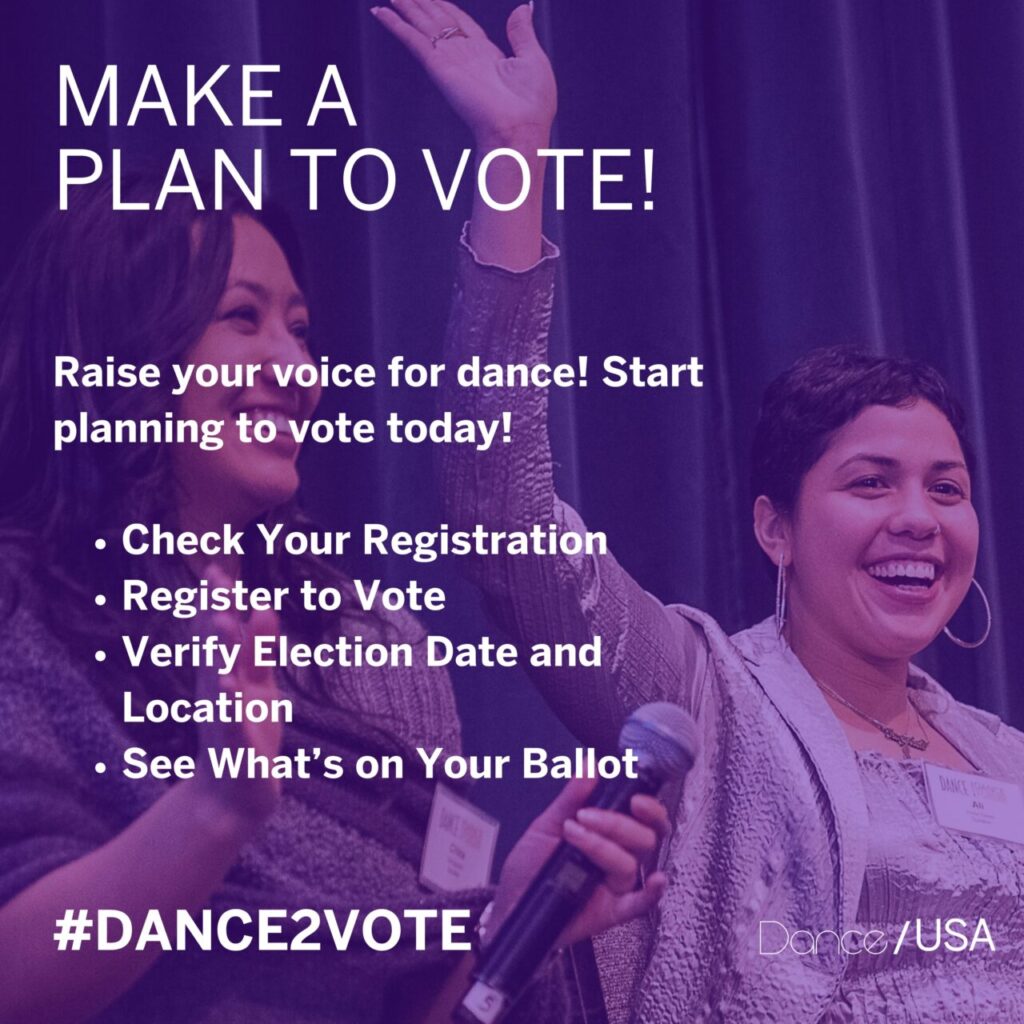
Please check below to find the dates you need to incorporate in your voting plan. The page linked below lists the voter registration deadlines, absentee/vote-by-mail ballot request deadlines, and deadlines for voting in the federal election for each of the 50 states, Washington, DC and the U.S. territories. Click on the state or territory, then select the which election you’re looking for to find out how to register and/or register with your secretary of state. State election websites also provide polling place locators and voter ID requirements (i.e. current driver’s license or state-issued ID).
Check Registration Status
Please check below to verify that you are registered in your state. The US Vote Foundation page linked below allows you to check your registration in each of the 50 states, Washington, DC and the U.S. territories. Click on the state or territory, you will be redirected to your state’s voter lookup page . State election websites also provide polling place locators and voter ID requirements (i.e. current driver’s license or state-issued ID).
Voter Registration
Every American who can vote should be registered to vote. If you are in the 50 states and Washington D.C., you can register to vote using the tool linked below. It is important to register as soon as possible to ensure that you have all of the information you need to vote early or on Election Day.
Absentee Voting/Vote By Mail Request Information
Dance/USA encourages its voters to request and mail in their ballots as soon as possible to ensure they are received by the local election office in a timely manner and by November 5, if not earlier.
- The deadlines to submit Absentee Voting (AV) or Vote-By-Mail (VBM) applications in order to receive a mail-in ballot by mail.
- The deadline to apply via mail for AV or VBM ballots may be different than the deadline to apply via in-person and/or online for your state.
Click on the button below for your state-specific instructions and guidance.
Engaging Candidates On The Issues
Besides voting and voting early, dance artists, dance professionals, and all who are supportive of the arts should engage candidates from all the political parties about various issues impacting the arts. There will be numerous opportunities this fall to engage in a variety of ways, including, but not limited to, candidate forums, debates, social media chats, and town halls. Nonprofit VOTE has great information about effectively engaging political candidates. Below are a listing of major issues impacting the dance community and the arts sector.
Key Policy Issues
- National Endowment for the Arts (NEA): Promoting Creativity and Public Access to the Arts
- Improving the Visa Process for Foreign Guest Artists
- Reinforcing Arts Education – Helping Children Achieve in School, Work, and Life
Additional Policy Issues
Other Important Resources
Below are additional resources to inform voters during the 2026 elections at all levels. Please note that Dance/USA is a nonpartisan organization and does not endorse or oppose any political candidates or political parties. Please let Dance/USA know if there any additional resources that should be listed to ensure all who are supportive of the arts have the most accurate information heading into the 2026 elections. Please contact Bertrand Evans-Taylor, Director of Government Affairs, at advocacy@nulldanceusa.org with any further resources or information.
Voter Resource Information
- BallotReady– To find out what is on your ballot.
- Can I Vote – An initiative developed by the National Association of Secretaries of State.
- Polling Place Locator – Developed by Vote.org
- Language Access – U.S. Election Assistance Commission
- REV UP Disability Voting Campaign – American Association of People with Disabilities
- Protecting the Rights of Voters with Disabilities – Civil Rights Division, U.S. Department of Justice
- Sign Vote – Developed by Communication Service for the Deaf, a nonpartisan social impact organization.
- U.S. Election Assistance Commission
- Vote. It’s Your Right. – A guide to the voting rights of people with mental health disabilities produced by the Bazelon Center for Mental Health Law, Autistic Self Advocacy Network, National Disability Rights Network, and Schulte Roth & Zabel LLP.
- Voting, Accessibility, and the Law – Developed by the National Federation of the Blind.
Arts-Related Voter Engagement Resources
- The Lobby Project– Theatre Communications Group guide on how to host get-out-the-vote events in the lobby during performances.
- Headcount – Stages voter registration drives at concerts and runs programs that translate the power of music and culture into real action.
After the Election
Once the dust settles on the election and officials are preparing to take office, this is the perfect time to congratulate them on their win and begin fostering an ongoing relationship. These are relationships that only you can foster. They will help decision-makers in your community understand your needs as a constituent and the value you bring to your community. These relationships also serve as useful social capital during any advocacy campaign.
What You Can Do
Connect on social media – Connect with your re-elected and newly-elected officials at all levels of government on social media. Most, if not all, have either a Facebook and/or X (formerly Twitter) account.
Congratulate and thank them – Please immediately send your re-elected and newly-elected officials a note of congratulations, thank them for their leadership, and indicate that you will follow up to discuss specific policy priorities.
Send an email – As soon as your re-elected and newly-elected officials receive their official email addresses, please communicate with them about your top specific issues of interest (2-3 issues) and indicate that you are available to meet with them to discuss further.
Schedule a meeting – Schedule a meeting (virtual or in-person) with your elected officials to discuss your specific issues of interest, discuss how your business, nonprofit organization, and/or the arts community are dealing with the current pandemic, etc.
Regularly Communicate – Continue to communicate with your elected officials on a regular basis about your specific issues of interest and how the current pandemic is impacting your business, nonprofit organization, and/or the arts community.
Dance/USA has a robust government affairs and advocacy operation to help its members with their advocacy efforts, including scheduling meetings, prepping members for their meetings, providing policy information and talking points. Various advocacy resources can be found on the Dance/USA website. Advocacy assistance and general inquires can be directed to Bertrand Evans-Taylor, Director of Government Affairs.